
What Is the Soul?
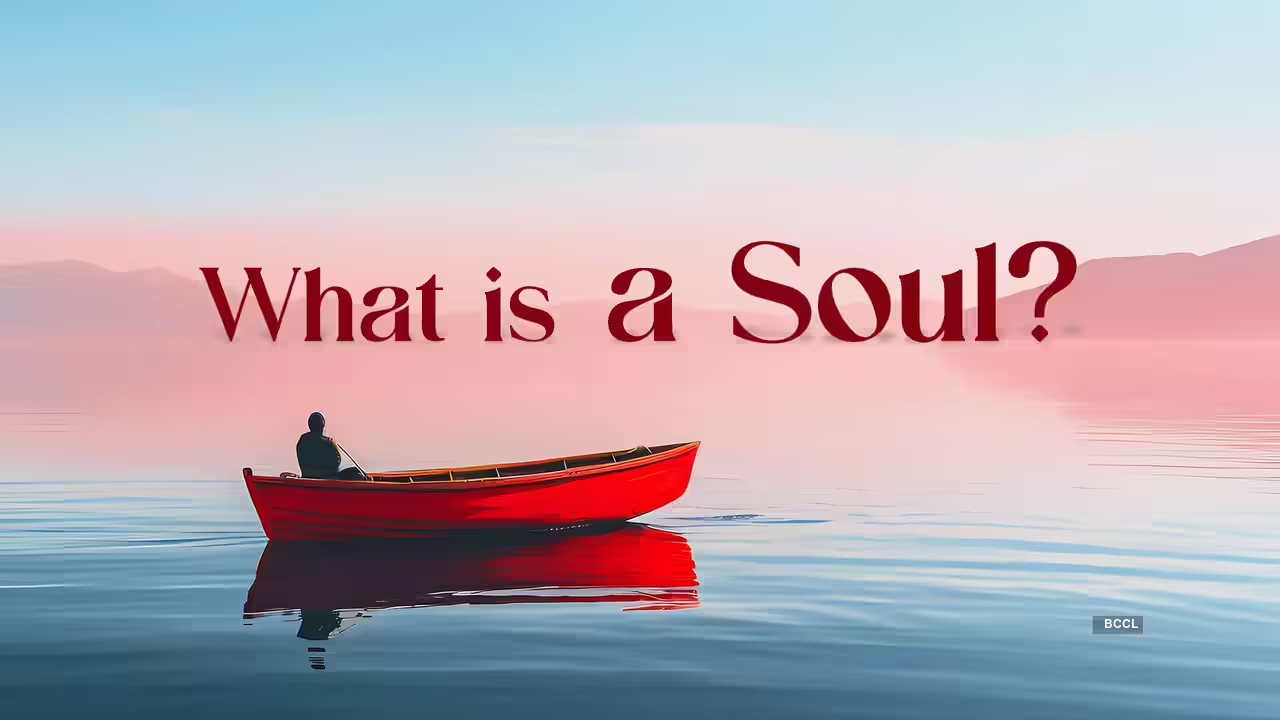
Every living creature consists of two essential components that distinguish it from non-living matter: the organic body and the soul. Together, these two elements make life possible. While the physical body is visible and measurable, the soul remains invisible and largely unknown. Due to this invisibility, many scientists deny the existence of the soul and consider it beyond the scope of scientific inquiry.

The Organic Body
With regard to the organic body, science has made remarkable progress. Scientists have uncovered countless secrets of the human body through advanced research and powerful microscopes. They have studied the body’s structure in great detail, from its smallest cells to its largest organs, and can explain many of its physical functions.
There is, therefore, no doubt about the existence of the body, as it is clearly visible and tangible. However, despite these advancements, scientists are still unable to answer several fundamental questions, such as:
- How do the different organs of the body work in perfect coordination?
- Why does a dead body become completely motionless, even though it was active just moments before death?
- What leaves the body at the moment of death that causes it to become inert?
- Why do the same atoms and molecules present in the human body not exhibit life in other substances?
Notably, there is no unique or extraordinary atom in the human body. Then what is it that differentiates living beings from non-living matter? Science alone has not been able to fully answer these questions.
The Reality of the Soul
When it comes to the soul, human knowledge is extremely limited. The soul is completely invisible and lies beyond the reach of even the most powerful microscopes or scientific instruments. For this reason, many scientists reject its existence and declare it outside the domain of science. However, the inability to detect something with scientific instruments does not prove that it does not exist.

There are many tiny organisms, such as bacteria and viruses, which were once invisible to the human eye. Before the invention of microscopes, people were unaware of their existence. Today, although many ordinary people have never seen these microorganisms themselves, they believe in them because they trust scientific evidence. Similarly, the invisibility of the soul cannot be used as a valid argument to deny its existence.
Those who reject the soul argue that they cannot understand anything of this nature. However, they should realize that the soul is not the only mystery of the universe that human intellect fails to comprehend. There are countless phenomena about which science has very little or no knowledge at all. The soul is simply one of these great mysteries.
Sources of Knowledge About the Soul
The Qur’an and Hadith are the only authentic sources that provide knowledge about the soul. This is why it is believed that scientists can never fully understand the reality of existence unless they accept divine guidance through the Prophets. Just as students cannot gain true knowledge through books alone without the guidance of teachers, scientists too cannot fully understand the universe without guidance from divine revelation.
The Holy Qur’an states:
“They ask you concerning the Soul. Say: the Soul is by the command of my Lord, and you have been given only a little knowledge.” (Qur’an 17:85)
This verse teaches humanity how to deal with the mysteries of existence. From it, we can infer several important points:
- There are many realities in nature that human knowledge can never fully comprehend, and the soul is one of them.
- The soul is a divine command.
- The Prophet (ﷺ) did not elaborate much on the soul because its true nature is beyond human understanding.
The Soul and Life After Death
Although the soul separates from the body at death, it does not completely sever its connection with it. This is evident from various traditions. During the Battle of Badr, when the bodies of the slain disbelievers were thrown into a pit, the Holy Prophet (ﷺ) addressed them. When the companions questioned whether the dead could hear him, the Prophet replied that they could hear even better than the living.
This indicates that the soul continues to exist after death and retains awareness, even though the body becomes lifeless.
The Soul and the Body
We know very little about the exact nature of the soul. We cannot say with certainty where it resides in the body or whether it is confined to the brain or spread throughout the body. However, there is no doubt that the soul exists and that the body functions as its tool or vehicle.
All scientists agree that the organs of the body function under the control of the brain. Yet, the brain itself operates under the command of the soul. This relationship can be described as:
Soul → Brain → Organs of the Body
Imam Ghazali beautifully explained this concept by stating that the body is like a horse and the soul is like the rider. It is the rider who determines the journey, not the horse. Accountability, therefore, lies with the soul, not the body.
This idea is further supported by the saying of the Holy Prophet (ﷺ):
“Actions are judged according to intentions.”
Intentions originate in the soul, while actions are merely their outward expressions through the body.
Accountability of the Soul
Judgment, intention, planning, and decision-making cannot be physically located within the brain or any other organ. The brain merely executes the commands of the soul through the body’s organs. Hence, the soul is solely responsible for all human actions.
The Qur’an confirms this accountability by stating that on the Day of Judgment, human organs will testify against the soul regarding the deeds they performed under its command.
Thus, all pleasures and pains are experienced by the soul through the body. Rewards and punishments are also meant for the soul alone.
Conclusion
In conclusion, the soul is the true essence of life and the ultimate source of human intention, action, and accountability. While science has made significant progress in understanding the physical body, it remains incapable of fully comprehending the soul. Only divine revelation provides insight into this profound mystery. Therefore, understanding life in its entirety requires not only scientific observation but also guidance from divine knowledge.



Comments
No comments yet. Be the first to write one.
Comments are closed.