
A Comparative Study of Islam and the West – An Intellectual and Ideological Analysis
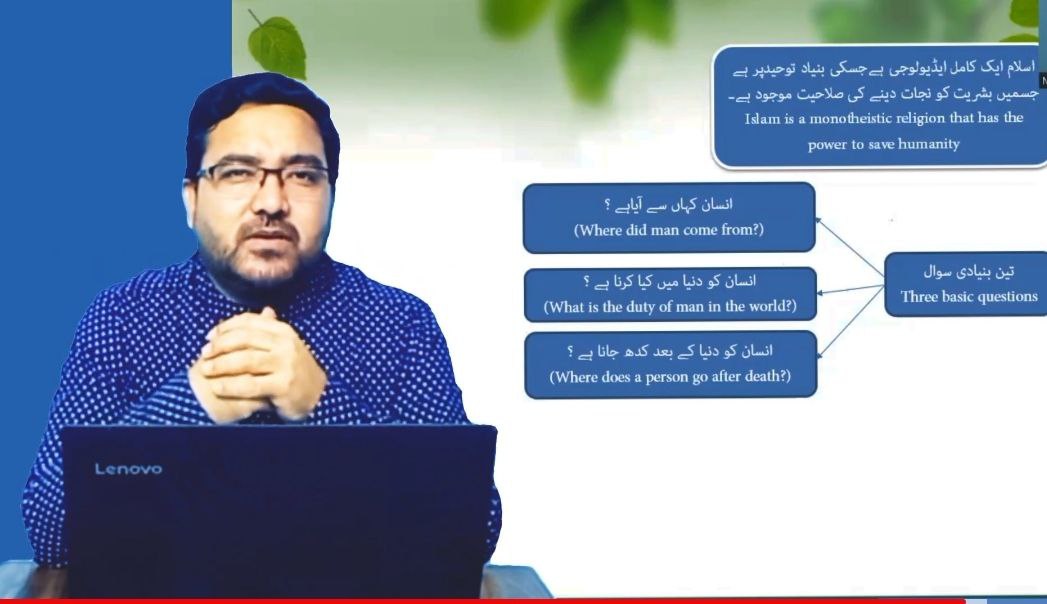
Part 1: Introduction
Throughout history, human thought and belief systems have been based on two fundamental aspects: Religion and Philosophical & Scientific Thought. From an Islamic perspective, the nature of humans is not limited to just material or biological existence; rather, it also encompasses spiritual, moral, and intellectual dimensions.
In this lecture, we will present a comparative analysis of Islam and Western ideologies to understand the key factors that shape human society and how different ideologies have influenced the world.
Part 2: Fundamental Ideological Division
1. Religious and Theistic Schools of Thought
These schools of thought believe in a Creator (God) and consider human life to be guided by divine teachings. These include:
- Islam
- Christianity
- Judaism
2. Non-Religious and Secular Schools of Thought
These ideologies reject or ignore divine teachings and rely solely on rational, empirical, or scientific approaches to understanding human life. These include:
- Humanism: A philosophy that places humans at the center of the universe, prioritizing reason and experience over divine guidance.
- Secularism: A doctrine that separates religion from politics and public affairs.
- Liberalism: An ideology that emphasizes individual freedom above all else.
- Materialism: A belief system that views reality solely in terms of physical matter, denying any spiritual aspect.
- Feminism: A movement advocating for women's rights, sometimes conflicting with religious principles.
- Modernism: An approach that rejects traditional values and embraces new ideas and changes.
- Rationalism: The belief that reason and logical analysis are the primary sources of knowledge, often challenging traditional religious beliefs.
- Empiricism: A philosophy that asserts that knowledge comes only from sensory experience and experimentation, rejecting metaphysical concepts.
Part 3: Key Differences Between Islam and Western Thought
| Islam | Western Thought |
|---|---|
| Believes in a Creator (Allah) and considers humans as His creation. | Questions or ignores the existence of a Creator. |
| Recognizes both revelation and reason as sources of knowledge. | Emphasizes reason, experience, and scientific methods. |
| Morality is based on divine teachings and prophetic guidance. | Morality is determined by human reason and societal norms. |
| Prioritizes family structure, modesty, and ethical values. | Prioritizes individual freedom, sometimes weakening family values. |
| Believes in the afterlife and views life as a test. | Often focuses only on worldly life, disregarding the afterlife. |

Part 4: The Influence of Western Ideologies and the Islamic Response
1. Secularism and Islamic Governance
- Western secularism aims to separate religion from politics, whereas Islam integrates governance with religious principles.
- The Islamic system promotes justice, equality, and Sharia-based laws, while Western secular systems often rely on majority opinions and shifting societal interests.
2. Liberalism and Islamic Ethics
- Western liberalism grants unrestricted personal freedom, whereas Islam emphasizes responsibility and ethical boundaries.
- Absolute freedom can be harmful if it disregards moral principles, as seen in some aspects of Western society.
3. Feminism and Women's Rights in Islam
- Western feminism often demands absolute gender equality, whereas Islam focuses on justice rather than absolute equality, recognizing natural differences between men and women.
- Islam grants women dignity, modesty, inheritance, and education rights, while some forms of Western feminism undermine family structures.
4. Scientific Empiricism and Islamic Knowledge
- The West largely relies on empiricism (experience-based knowledge), whereas Islam acknowledges revelation, reason, and experience as complementary sources of truth.
- The foundation of scientific progress was laid by Islamic scholars, but the West later secularized it.
Part 5: Conclusion
There are significant differences between Islam and Western ideologies, but constructive dialogue between the two is necessary to establish a balanced social and intellectual framework.
- Islam views humans as both material and spiritual beings, whereas Western thought often focuses more on material aspects.
- The West has made remarkable scientific advancements, but it has also created moral and social challenges.
- Islam encourages knowledge, research, and progress but emphasizes that they should be guided by divine teachings and ethics.
📌 Final Message:
"We should adopt the positive aspects of Western thought while preserving Islamic values and ethics to create a balanced and progressive society."
Part 6: Practical Steps
✔ Integrate Islamic teachings with modern scientific knowledge.
✔ Study Western philosophy critically while evaluating it in light of Islamic principles.
✔ Muslims should actively contribute to modern technology, research, and development to strengthen their intellectual and scientific position.
✔ Educate the youth about Islamic teachings and contemporary intellectual challenges so they can represent their beliefs with confidence.